Chicken Road: How Much You're Really Risking Per Lane
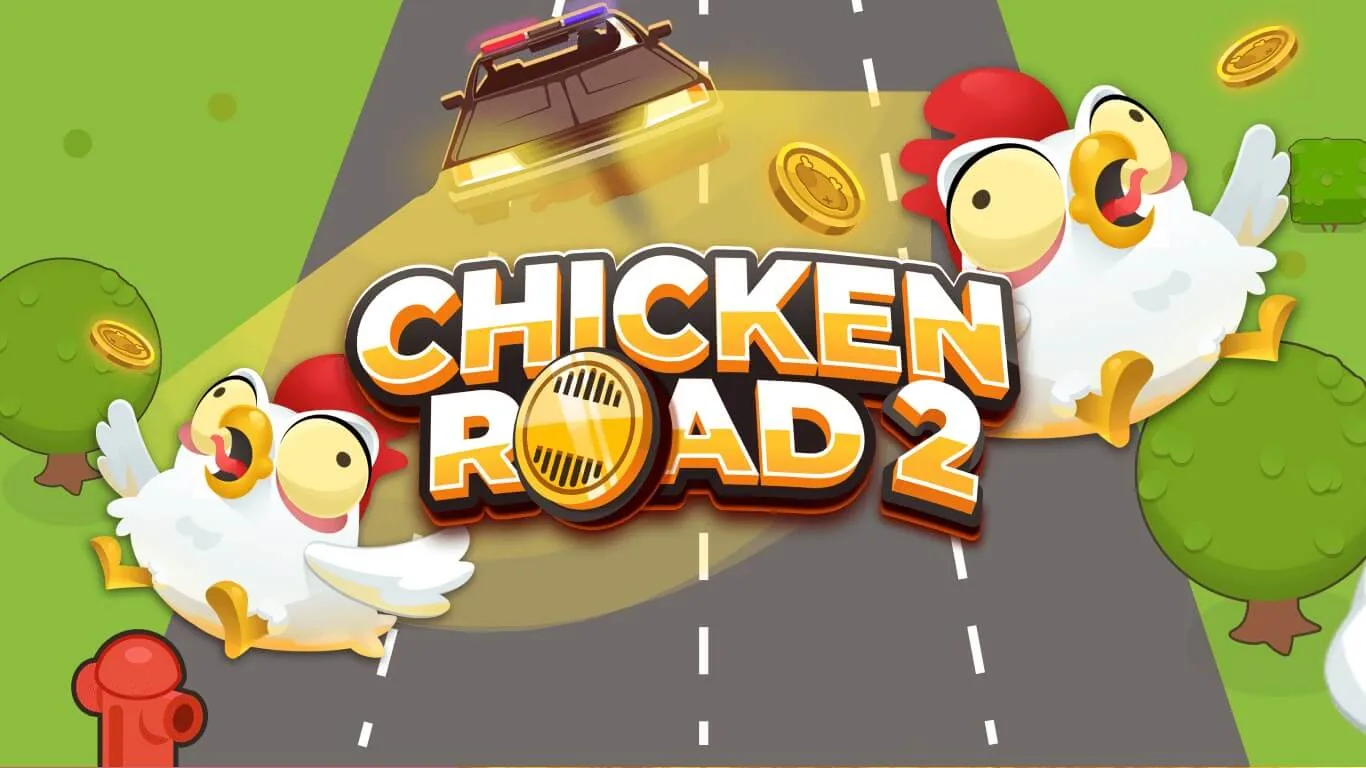
Can you actually cash out before the chicken gets flattened? That's the question every Chicken Road session hinges on — and the reason your bankroll swings harder than most slots. This isn't a reel game with scatter symbols; it's a crash-style instant round where a cartoon chicken hops across traffic lanes and you collect a growing multiplier each time it survives. Hit the cash-out button early and you lock a small win. Wait for the big number and you risk losing the lot if a car appears on the chicken's lane.
InOut built Chicken Road around real-time decisions and provably fair RNG, so there's no spin history to chase and no feature buy to shortcut the outcome. You pick a difficulty level that sets how many lanes the chicken must cross and how dense the traffic is, then you watch the multiplier climb while cars spawn randomly. The game runs in your browser on any UKGC-licensed site that carries InOut's catalogue, and because it's an instant title you can jump in and out of rounds in seconds — which also means your balance can evaporate just as fast if you don't respect the maths.
Four Difficulty Tiers and What They Actually Mean for Your Stake
Chicken Road lets you choose between Easy, Medium, Hard and Hardcore before each round. The label tells you how dangerous the crossing is, but what matters is the lane count and the collision frequency baked into each mode — because those two numbers dictate how often you'll see a win and how big the multiplier can grow before the chicken meets a bumper.
Easy mode feels like a slow grind: you'll cross more lanes without incident, but the payout per lane is smaller because the RNG knows collision risk is low. Hardcore flips that — fewer lanes to clear means each successful hop adds more to the multiplier, but cars spawn often enough that most attempts end before you hit double digits. If you're chasing a four-figure multiplier you need Hardcore, and you need to accept that nine attempts out of ten will bust before you get there.
The game doesn't publish separate RTP figures for each difficulty, but volatility scales with mode: Easy is low-variance small-ball play, Hardcore is high-variance boom-or-bust. Your £10 stake on Easy might return £12 or £15 over a handful of rounds; the same tenner on Hardcore will either multiply fast or vanish in two hops.
How a Round Works: From Bet Placement to Cash-Out (or Crash)
- Pick your difficulty mode — the interface shows lane count and risk label for each tier.
- Set your stake between £0.10 and £170 (the £200 max in the provider's spec converts to roughly £170 at current rates; UKGC sites enforce a £5-per-spin cap for standard slots, but instant games like this fall under different rules and many operators apply their own house limits).
- Press «Start» or «Bet». The chicken appears at the bottom of the screen and the first lane lights up.
- The multiplier starts at 1.00× and ticks upward as the chicken hops forward. Each lane crossed safely adds an increment — the size of the jump depends on difficulty and lane number.
- Cars move horizontally across random lanes. If a car occupies the lane the chicken is entering, the round ends instantly and your stake is lost.
- You can cash out at any moment by hitting the green button. Your payout is your stake multiplied by the current multiplier shown on screen.
- If the chicken reaches the final lane without being hit, the round ends automatically and you're paid at the terminal multiplier for that mode.
The entire sequence takes between two seconds (instant crash) and thirty seconds (full crossing on Easy). There's no cool-down between rounds, so you can fire another bet the moment the previous result is settled. That speed is the hook and the danger: three losing rounds in ninety seconds will crater a £50 session stake if you don't throttle your bet size.
Multiplier Growth and the Maths Behind the Max Win
The multiplier isn't linear — it accelerates as the chicken advances deeper into the road. Early lanes might add 0.10× or 0.15× per hop; later lanes (especially on Hardcore) can jump by 0.50× or more because the cumulative survival probability is lower. The game's published max win is £17,000 (converted from the $20,000 cap in the provider spec), which means you need a multiplier above 100× on the maximum stake to approach that ceiling.
In practice, a 100× multiplier requires near-perfect luck on Hardcore — clearing all eighteen lanes without a single car collision. Most sessions will see peak multipliers between 3× and 15× before a crash, and cashing out in that range is how regular players stay solvent. The temptation is to hold for 50× or higher, but every additional lane crossed exponentially increases the chance of a loss because the RNG spawns more cars as the round progresses.
RTP, Volatility and What «High Variance» Actually Costs You
InOut doesn't publish a headline RTP figure for Chicken Road in the way slot developers stamp 96.5% on a paytable, but crash-style games typically run between 97% and 99% theoretical return because there's no complex symbol math — just collision probability and multiplier scaling. The edge sits in the gap between the true odds of crossing X lanes and the payout the game offers when you do. Even at 98% RTP, the house takes £2 from every £100 wagered over the long term, and short-term variance means your personal return might be 70% or 130% across a single session.
Volatility is where Chicken Road separates from fixed-payout instants. Because you control when to cash out, you're the source of variance: bail early and you'll see steady small returns with low swings; chase high multipliers and your balance will spike and crash in rhythm with your risk tolerance. Hardcore mode on a £10 stake can deliver a £200 hit in one round, but it can also erase ten consecutive bets without a single win above 1.5×. That's not a flaw — it's the design. If you can't stomach five or six dead rounds in a row, drop to Easy or cut your stake.
- Low variance: Easy mode, cash out at 2× to 3×, accept small steady gains
- Medium variance: Medium or Hard mode, target 5× to 10×, expect losing streaks
- High variance: Hardcore mode, hold for 20×+, budget for long dry spells and occasional explosions
Auto Mode, Manual Play and the Discipline Tax
Chicken Road offers manual control (you click cash-out yourself every round) and an auto mode where you can set a target multiplier and let the game close positions automatically. Auto mode is seductive because it removes the emotional decision — you program a 5× exit and walk away — but it also strips the one edge you have in a crash game: real-time judgment. If you watch the round unfold you can sense traffic density and bail early when cars cluster; auto just executes the number you fed it, even if the next lane looks suicidal.
Manual play rewards attention. You'll notice patterns in car spawn timing (they're random per round, but within a round they follow visible movement arcs) and you can cash out half a second before a collision becomes obvious. That half-second is the difference between a 4.2× win and a zero. The cost is focus — if you're multitasking or tilted from a previous loss, you'll mis-click or freeze, and the round will end while your finger hovers over the button.
Most players toggle between modes: auto for low-stakes grind sessions where you're testing difficulty settings, manual when you've got a bigger stake on the line and want full control. Either way, set a stop-loss before you start — decide how many dead rounds you'll tolerate before walking away — because Chicken Road's speed will let you burn through a week's budget in an hour if you chase losses on auto.
Mobile Performance and Where the Game Actually Lives
Chicken Road runs in-browser on desktop and mobile with no download required. InOut built it in HTML5, so it scales to any screen size and the touch controls (tap to start, tap to cash out) work as smoothly as mouse clicks. The game's lightweight — no 3D renders, just flat vector art and simple animations — which means it loads fast even on a patchy 4G connection and won't hammer your battery the way some live-dealer feeds do.
On a phone the interface stacks vertically: difficulty selector at the top, road view in the middle, bet controls and multiplier counter at the bottom. The cash-out button is large and centred, which is critical because a mistap on a small target will cost you the round. The game pauses if you switch apps or lock your screen mid-round, and when you return it resumes from the frozen state — you won't lose a live bet to a notification banner.
You won't find Chicken Road as a standalone app on Google Play or the App Store. It's embedded in the game lobby of whichever UKGC-licensed casino carries InOut's content. That means you access it through the operator's website or their web-app wrapper if they offer one. The upside: no separate download or update cycle. The downside: you're tied to the operator's infrastructure, so if their site is slow or their payment rails are clunky, that friction touches every session.
Demo Mode, Real-Money Play and the UK Licensing Reality
Free demo play is available on most UKGC-licensed sites that host Chicken Road, but you'll need to create an account and verify your age before the operator unlocks it — that's a UK regulatory requirement, not a provider restriction. Once you're logged in, the demo uses virtual credits and runs the same RNG as real-money mode, so it's a legitimate way to learn the timing and test difficulty settings without staking cash. The demo won't teach you how losses feel, though, and that emotional gap is where most players misjudge their risk tolerance when they switch to real stakes.
For real-money play, you'll deposit via debit card, PayPal, Apple Pay, Open Banking or paysafecard (credit cards have been banned for gambling in the UK since 2020). Minimum deposits vary by operator, typically £10, and you'll hit KYC checks before your first withdrawal — passport or driving licence, proof of address, sometimes a source-of-funds query if you're depositing more than a few hundred pounds a month. Affordability checks start from £150 net deposits monthly, using credit-reference data at the first stage, so if you're planning to play regularly expect the operator to ask questions.
Withdrawals go out via e-wallets (a few hours to 24 hours), Faster Payments to your bank (same day to two working days), or back to your debit card (one to three working days). The first withdrawal takes longest because the operator is verifying documents; after that, repeat cashouts usually clear within the faster end of those windows. Your winnings are tax-free — the operator pays Remote Gaming Duty, which rose to 40% in April 2026, but that's on their gross revenue, not your payout.
FAQ
What's the actual house edge in Chicken Road and does difficulty change it?
InOut hasn't published a single RTP number, but crash games typically return 97–99% to players over millions of rounds, leaving a 1–3% edge for the house. Difficulty mode changes volatility and multiplier scaling, but the underlying edge stays constant — Hardcore doesn't cost you more per bet in the long run, it just concentrates your wins and losses into sharper swings. If you play a thousand rounds on Easy and a thousand on Hardcore with the same stake, your net result should converge to a similar percentage loss, but the Hardcore journey will have bigger peaks and deeper troughs.
Can I use a strategy to beat the RNG or is it purely luck?
The RNG is provably fair and each round's outcome is determined the moment you press start — no strategy can predict which lanes will spawn cars. What you can control is when you cash out, and that's where discipline matters: setting a target multiplier (say, 5×) and sticking to it will smooth your variance and keep you solvent longer than chasing 50× every round. You're not beating the house edge, you're managing the volatility it creates. Any system that claims to predict crashes or guarantee profit is selling fantasy; the maths doesn't allow it.
How fast can I actually lose money on this game compared to a slot?
Faster. A slot round might take five to ten seconds if you're not using turbo mode, and you're locked into the result once the reels stop. Chicken Road lets you fire a new bet every two seconds if you're playing Hardcore and crashing early, and because you control the cash-out, there's no forced pause to process the outcome. If you're tilted and mashing the bet button without adjusting your stake, you can drain a £100 balance in under ten minutes. The speed is the product's selling point and its biggest danger — treat your session stake as a fixed budget and stop when it's gone, because the game won't slow you down.